BRASIL-EUROPA
GLOBAL STUDIES
CULTURE/NATURE

BRASIL-EUROPA
GLOBAL STUDIES
CULTURE/NATURE
University of São Paulo
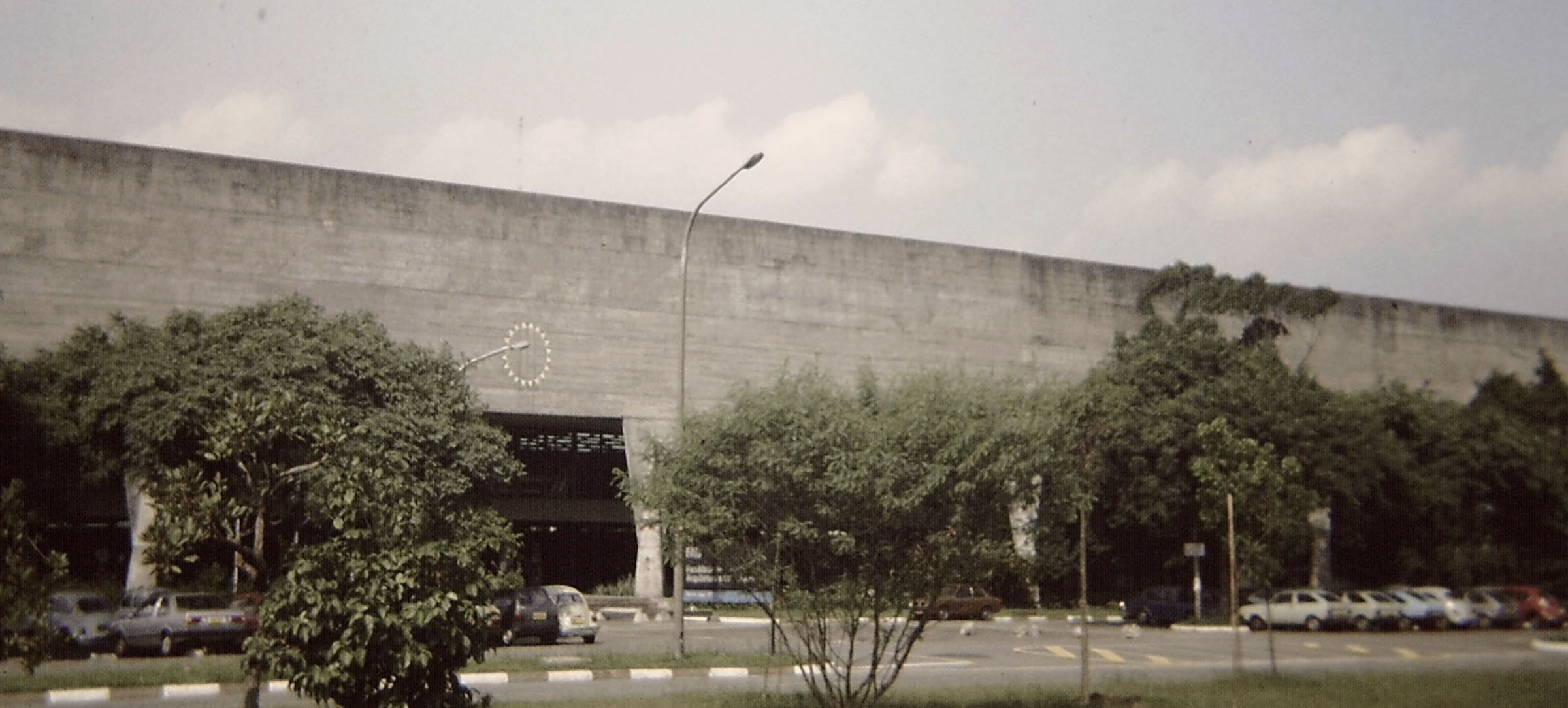
Faculty of Architecture and Urbanism (FAU/USP) 1969
Global Studies: Culture/Nature
Photo A.A.Bispo©
1969
Studies of cultural processes in global contexts
using Euro-Brazilian relations as a frame of reference
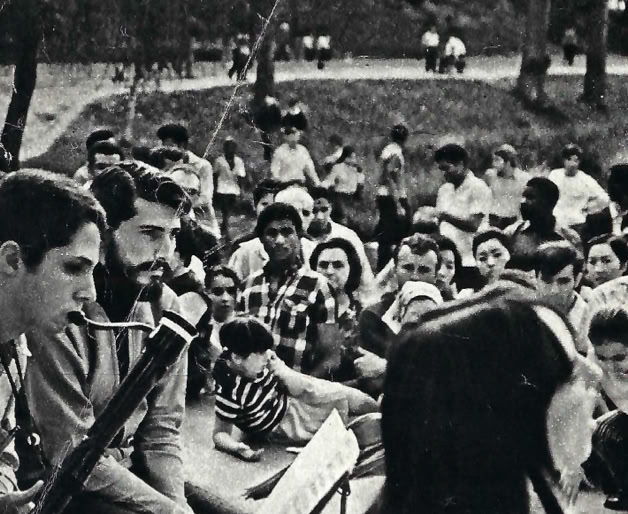
Paraphernália. Aclimação Park 1969
Global Studies: Culture Nature.
São Paulo, Faculty of Architecture and Urbanismo. 1969
Global Studies: Culture/Nature
Photo: A.A.Bispo©
São Paulo
São Paulo, Osasco, Barueri, Cotia, Carapicuíba, Santo Amaro, Mogi das Cruzes, Taubaté, Pindamonhangaba, Guaratinguetá, Lorena, São Luís do Paraitinga, Cunha, Lagoinhas, Aparecida do Norte, Santana do Parnaíba, Cabreúva, Itú, Jundiaí, Atibaia, Bragança Paulista, Mogi Mirim, Serra Negra, Santos
Minas Gerais
Poços de Caldas, Andradas, Machado, Caldas
Paraná
Curitiba, Lapa, Paranaguá, Antonina
Cultural Studies and Urban Contexts | From the Center to the University Campus | Philosophy, Literature, Sciences, and Architecture | Disarticulations and Insularities | New Articulations and Transdisciplinarity | Politics and Cultural Studies | Transversal Strategies and Cultural Studies | Faunos da Pauta | Kitsch Manipulation and Research | Architecture and Music | Urbanology and Cultural Analyses of Spaces | Architectural Acoustics and Music | Cultural Studies of Anhangabaú | Methodology of History and Urban Geography | History of Music at the Faculty of Humanities, USP | Music in the Urban History of São Paulo | Paraná International Festival and ND | Music Seminar of Bahia and São Paulo | Reception of Bach in Brazil and its Ideological Problems | Austria-Germany and Switzerland/Brazil Relations | Acculturation of Religious Music | Revision and Reorientation of Gregorian Chant | Medieval Chant and Cultural Processes | From Solesmes Method to Semiology | Visual arts and musicology | Museum of Contemporary Art/USP | Tarsila do Amaral and Arts in the 1920 | France-Brazil in São Paulo | Avant-garde music at SESC | Songs of the Americas and inter-Americanism | Contemporary Polish Music | New music in higher education
* * *
In cultural studies, 1969 was marked by the consequences of changes in the relationships between the university, student life, and the historical center and cultural life of São Paulo. The transfer of university institutions from central neighborhoods such as Vila Buarque, Higienópolis, and Consolação—marked by the dynamism and aspirations of student youth, progressive intellectuals, artists, and musicians, with their meeting points, theaters, and bars—to the campus in the distant university city of Butantã corresponded to the military regime's intentions to combat the student protest movement, revolts, demonstrations, and revolutionary actions, the international landmark of which was the year 1968.
The transfer of faculties to isolated buildings within the university campus led to the disarticulation of groups and interactions between intellectuals and students from various fields of knowledge. The installation of institutions in isolated buildings, distanced from each other by large green areas like islands, while celebrated as progress and advancement, demonstrated a conception of areas of knowledge, research, and the arts based on categorizations of objects of study and delimitations of spheres that was criticized and needed to be overcome, according to the orientation towards boundary-transcending processes that characterized the New Diffusion movement.
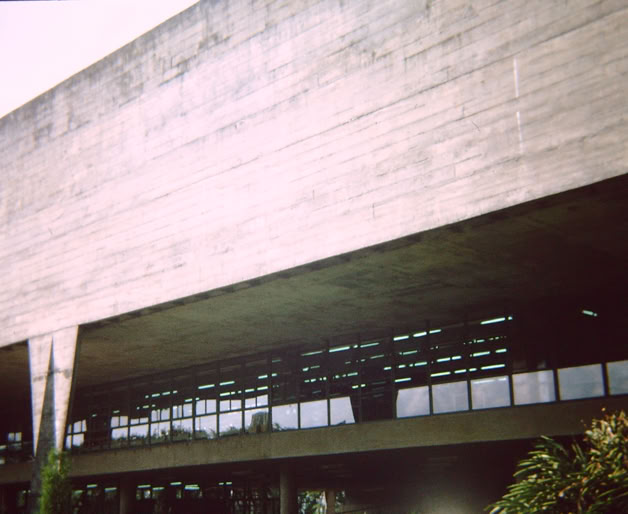
From this insular situation, with spaces in concrete buildings celebrated as examples of advanced architecture, such as the brutalist building of the Faculty of Architecture and Urbanism (FAU/USP), university life was marked, on the one hand, by the concentration of interests on technical and professional matters, depoliticizing and distanced from critical reflections and socio-cultural analyses. On the other hand, university life was marked by the search for the re-establishment of articulations and interactions, of transdisciplinary studies and actions that, in the oppressive situation of the time, manifested themselves through transversal paths, through satire, sarcasm, parody, and laughter in the service of unmasking oppressive structures and their norms and values, and thus of liberation.
The interest then aroused by Kitsch, in its multiple contextual insertions and ambivalences, served these purposes, revealing untruths in the relationships between form and content, narrow-mindedness, reactionary attitudes, and violence behind sentimental or glorifying appearances. The central focus of the reflections and work was the exposure of untruthfulness, of the lies behind the facade of decency and respectability, behind the appearance and pose of power and domination. Sharpening the sensitivity to recognize the discrepancy between content and form was a primary goal. It was intended to contribute to an ethically guided reading of culture in its symbolic nature, to the recognition of the untruthfulness behind outward perception.
A significant expression of this activism through transversal means by university students was the formation of the group Faunos da Pauta at FAU/USP, which also ironically referred to itself as "Madrigal and Lyric Company". Its repertoire and the staging of its performances served as a subtle critique of socio-political, cultural, and structural issues through the playful experience and treatment of kitsch in its various expressions, thus revealing and overcoming its authority and risks. In its actions, visual communication, in its relationship with music as a driving force of emotions, played a fundamental role. The studies and their treatment in service of the cultural analysis of situations and group identities were developed in meetings and actions, with Antonio Luiz Dias de Andrade standing out above all.
Interest in the relationships between music and architecture, between the arts of movement that unfold over time and the architecture experienced by those who move within spaces, motivated an interest in aesthetic questions in philosophical, scientific, and cultural senses. Studies of architectural acoustics could not ignore acoustic issues from a musical perspective, unavoidable in the design of auditoriums, theaters, and churches. Physics professors like the engineer Cintra do Prado dedicated themselves to music and followed developments in international musical creation.
The practice of music within the academic sphere was not recent. Francisco (Chico) Buarque de Holanda, who was then gaining popularity, particularly with his band, had studied at the FAU, capturing the sound of the band passing through the streets and the feelings it evoked. Not only the relationships between Music and Architecture in their multiple senses, but also that between Music and the City, began to be thematized. In this sense, studies of the perception and experience of urban spaces and processes through music began, and these studies would continue in the following years in Brazil and Europe.
These urban studies, involving the reading and analysis of spaces and their transformations over time, stemmed from studies of downtown São Paulo, particularly the Anhangabaú Valley, recognized as a metaphorical sounding board, marked by the Municipal Theater and monuments related to music, as well as theaters in its vicinity. These studies initiated intense collaborations with the Nova Difusão movement of architecture students. An emblem of these studies was the lithograph of Jules Martin on the cover of Bertin's Hymne au Brésil from the 1870s, a time of crucial urban transformations in the city of São Paulo.
The historiographical issues addressed in 1968 continued in studies of Historical Methodology and Urban Geography at the Faculty of Philosophy, Letters and Sciences of the University of São Paulo. The movement acquired legal status as a society in 1968, which enabled it to hold events with the support of official bodies, culminating in the Baroque Festival, which addressed fundamental issues of historical periodization and methodology and the Bach rezption in Brazil. These reflections were related to an interest in music and its relationship with architecture, since music is not only an expression but also an agent of psycho-mental processes and their consequences in individual and collective actions.
The study of music in the historical processes of São Paulo, with special consideration of the 19th century, was the subject of a course held there in 1969 by a historian from Campinas. Sources gathered in cities such as Sant’Ana do Parnaíba, Pirapora do Bom Jesus, Itu, Jundiaí, Campinas, and others in the interior of the state at the Center for Musicological Research contributed to these studies in the History Department of the faculty.
Studies in international collaborations were intensified in meetings between members of Nova Difusão and researchers and musicians participating in the Curitiba Music Festival and the Paraná International Courses. These meetings intensified dialogues with musicians and composers from São Paulo such as Renata Braunwieser, Roberto Schnorrenberg, Osvaldo Lacerda, Fritz Jank, Isolda Bassi Bruch, Paulo Affonso de Moura Ferreira, Sandor Molnar Junior, Eleanor Dewey, and Nicole Jeandot. Relationships were established with other personalities from other cities and regions, such as Edino Krieger, Ernst Mahle, Jamary de Oliveira, Pierre Klose, D. João Evangelista Enout, and José de Almeida Penalva. One aspect of the renewal efforts concerned religious music, discussing issues of acculturation in its relationship with a questionable revitalization of nationalist conceptions. Contacts were also made with composers and instrumentalists from abroad, such as the organist Marilyn Manson and the pianist Werner Genuit.
With Renata Braunwieser, president of the Bach Society of São Paulo, studies on the diffusion and reception of works by Bach and his contemporaries in Brazil were continued. Having traveled to Austria to establish contacts with musicological circles in Vienna, her experience – partly negative – as well as her interest in issues related to musical dissemination, motivated the development of a project for collaborations with Bach researchers in Germany, as well as international studies of the Bach movement, which began in 1974 in the "Bach city" of Lüneburg, Germany.
The collaboration with the composer and conductor Ernst Mahle continued in frequent, multi-hour meetings in the city of Piracicaba, during which intensive discussions took place regarding music theory and aesthetic problems, as well as trends in thought and creation in Germany, particularly in the Stuttgart and Karlsruhe area. With the composer, conductor, and theorist Ernst Widmer, he dealt with issues related to cultural diffusion, the main theme of the New Diffusion movement. With the pianist Pierre Klose, also from Switzerland, who worked at the Bahias Music Seminar, This led to studies of 20th-century musical currents, developed in previous years with Paulo Affonso de Moura Ferreira, focusing on the Vienna School and the diffusion and reception of dodecaphonism in Brazil. These relationships with these and other musicians and intellectuals – such as Walter Smetaka – from the Bahia Music Seminars would be deepened in the following years, leading to meetings in Salvador and later in Europe.
One aspect of the developments driven by these meetings in Paraná was the creation of a group focused on renewing Gregorian chant studies, guided by an orientation towards cultural processes in the global contexts of the ND- movement. At its Center for Musicological Research, group of students of different religious affiliations or agnostics for Studies of Gregorian chant was formed, led by Eleanor Dewey, an English scholar of medieval manuscripts. The study sessions took place at the headquarters of the Pio X Institute in São Paulo, a branch of the same institute in Rio de Janeiro, located in a studio in the park of the Colegio des Oiseaux in São Paulo.
Long active in the Gregorian chant movement oriented according to the Solesmes method, Eleanor Dewey was associated with renowned Benedictine researchers from Solesmes. Interested in musicological questions, she closely followed new trends in the study of medieval manuscripts, at a time when semiotic studies were still in their initial phase. Although still proceeding according to Solesmes' method and rhythmic concepts, she began to follow new trends, gradually becoming the most prominent representative of semiology in Brazil.
This study sought to consider these new semiotic researches and their interpretative implications from the perspective of the cultural processes of the New Diffusion movement. Attention was focused on the insertion of Gregorian chant into cultural processes in Brazil in its relations with European developments, conducted both from historical sources and from the results of empirical research. Works relating to medieval chant in Portugal by Solange Corbin served as a model, establishing connections with this researcher. To experiment with this interpretative practice according to the new research trends and the cultural orientation of the movement, the Gregorian Choir of São Paulo of the New Diffusion Society was created.
Reflections, studies, and initiatives continued to focus primarily on new or avant-garde music. Dialogues held with personalities from Bahia in Paraná intensified the activities of ND members with Paulo Affonso de Moura Ferreira in São Paulo. One of the events that demonstrated interest in the study of cultural processes through music in São Paulo was the one dedicated to Tarsila do Amaral and the relationship between visual arts and music at the Museum of Contemporary Art of São Paulo. This conference and concert intensified interest in the relationship between France and Brazil after the First World War, which had already been addressed in meetings organized by J. de Souza Lima in the first half of the 1960s. It led to studies of the Group of Six and its significance for Brazil at the Center for Research in Musicology, to the recognition of the importance of the work Saudades do Brasil from Darius Milhaud as an emblem of the group led by Martin Braunwieser in Austria after the 1914-18 war, and to the study of the work and conceptions of Erik Satie by ND members.
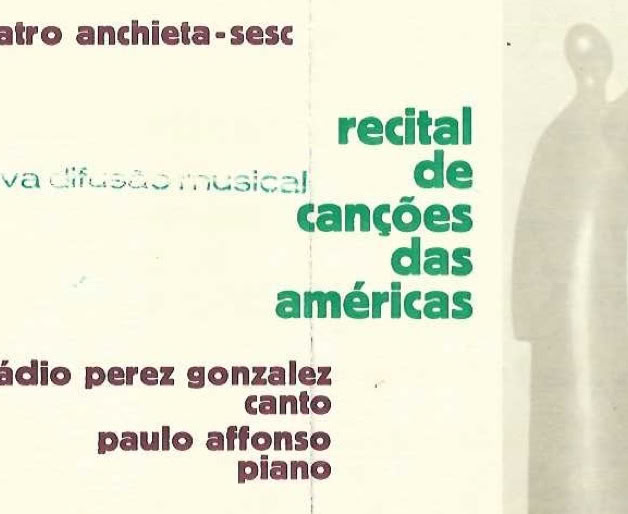
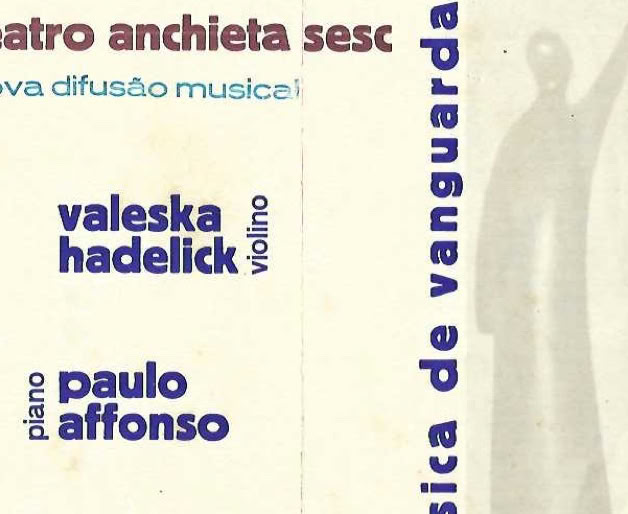
Two concerts held at the Teatro Anchieta SESC, organized by Paulo Affonso de Moura Ferreira in collaboration with Nova Difusão, marked ND's studies in August 1969. The avant-garde music concert, conducted by Valeska Radelich and Paulo Affonso, consisted of compositions by J. Cage, A. Webern, K. Penderecki, F. Liszt (Bagatelle without tonality), K. Serecki, F. Evangelisti, L. de Pablo, N. Kokron, R. Komorous, J. Luciuk, and the Brazilians Almeida Prado and Gilberto Mendes. A landmark for the renewal of perspectives on inter-Americanism in music and musicology was the recital of songs from the Americas by Eládio Perez Gonzalez and Paulo Affonso, held in collaboration with ND on August 20th. The program included compositions by Alberto Ginastera (Argentina), Amadeo Roldan (Cuba), Ncolas Pérez-Gonzáles (Paraguay), Emilio Bigi (Paraguay), Aaron Copland (USA), Gerardo Guevara (Ecuador), Aantonio Estevez (Venezuela) and Silvestre Revueltas (Mexico), as well as by the Brazilian Jamary Oliveira.
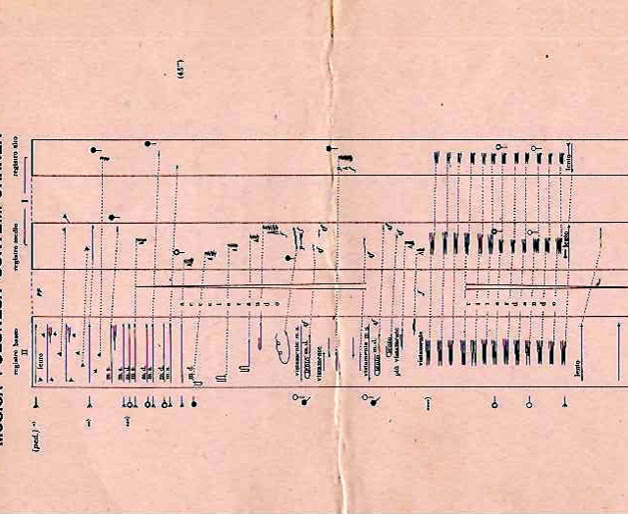
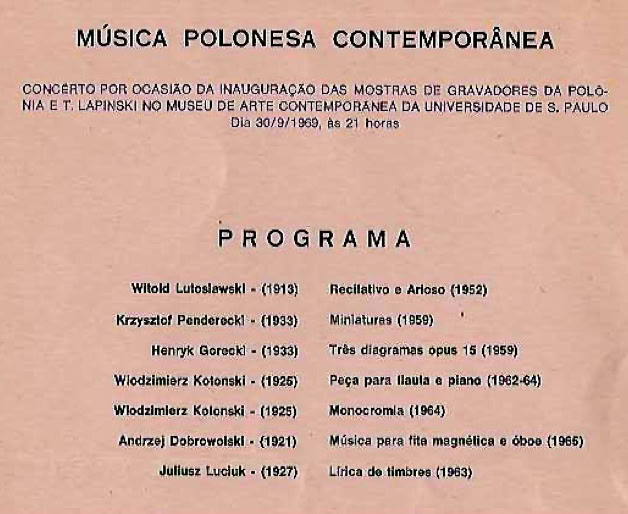
The year 1969 was marked by a special interest in the works of 20th-century Polish composers and the significance of Poland in contemporary musical creation, with particular consideration given to the Warsaw Autumn Festival. Contemporary Polish Music was a highly significant concert held on the occasion of the inauguration of exhibitions of Polish engravers and E. T. Lapinski at the Museum of Contemporary Art of USP on September 20th. The program, coordinated by Paulo Affonso de Moura Ferreira with the collaboration of the São Paulo Musical Youth and Nova Difusão, consisted of works by W. Lutoslawski, K. Penderecki, H. Gorecki, W. Kolonski, A. Dobrowolski, and J. Luckluk, performed by G. Busch, V. Hadelich, P. Affonso, and S. Masano. The event was marked by a lecture by Paulo Affonso that sparked debate and gave impetus to subsequent ND initiatives, in particular motivating the São Paulo Autumn Festival that would take place in 1970.
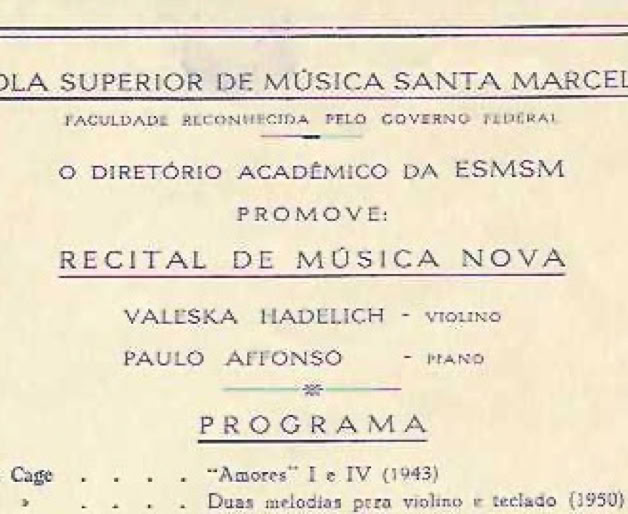
The presence of contemporary music in higher music studies was pioneered by a concert organized by Paulo Affonso de Moura Ferreira in collaboration with Nova Difusão, promoted by the Academic Board of the Santa Marcelina Music Faculty. The New Music Recital held on October 2nd by Valeska Hadelich and Paulo Affonso consisted of compositions by John Cage, Anton Webern, Krzysztof Penderecki, Jan Klusak, Kazimierz Serecki, and the Brazilian composers Almeida Prado, Gilberto Mendes, Joaquim Thomás Jayme, Ernst Mahle, and Breno Blauth.
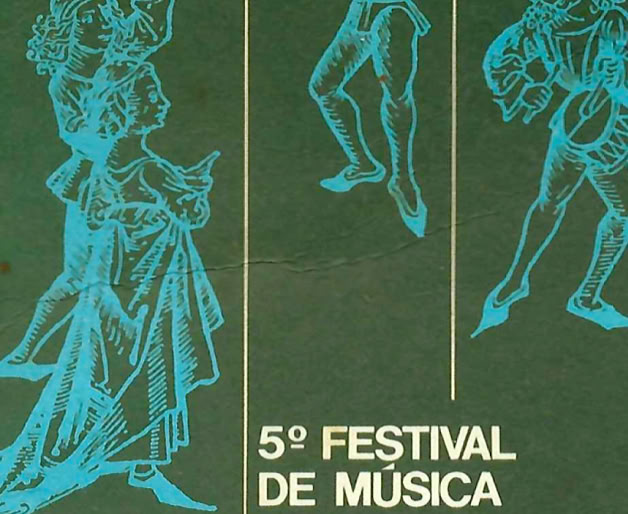
In studies of Culture/Nature relations within the scope of cultural studies conducted using music from the New Diffusion movement, the main event was a concert by the Paraphernália ensemble in the Aclimação Garden. This event was motivated by an interest in Renaissance studies aimed at reviving it, renewing perspectives and mentalities in the present day. The motto was that the Renaissance is seeking to be reborn.
Eleanor Florence Dewey (1912-2008). Mère Marie du Rédempteur C.S.A.
An essay on overcoming falsehood in culture