BRASIL-EUROPA
GLOBAL STUDIES
CULTURE/NATURE

BRASIL-EUROPA
GLOBAL STUDIES
CULTURE/NATURE

Villa-Lobos Museum. Rio de Janeiro1987
Global Studies: Culture/Nature
Photo: A.A.Bispo©
1987
Studies of cultural processes in global contexts
using Euro-Brazilian relations as a frame of reference
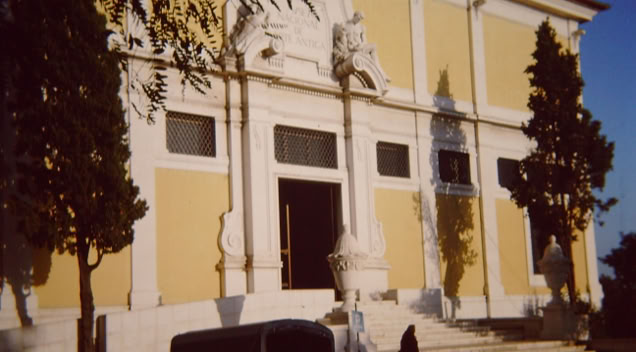
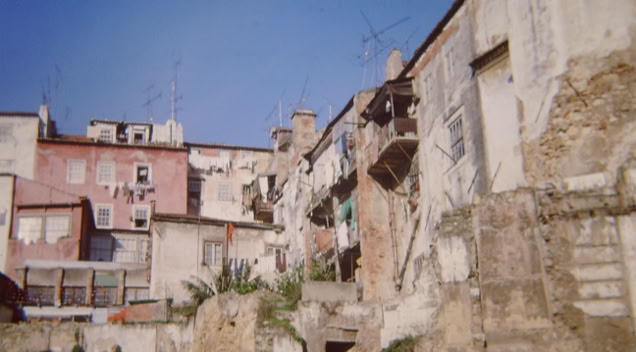
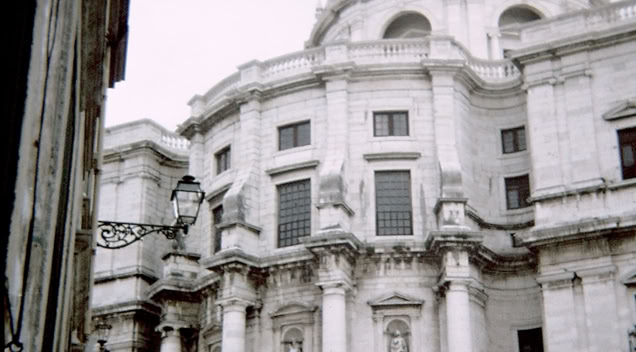
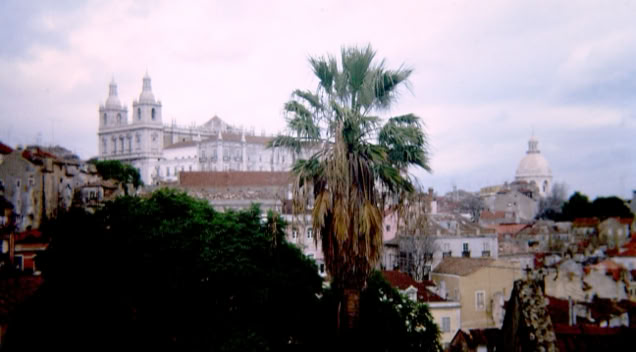
Lisbon. Portugal 1987
Global Studies: Culture/Nature
Photo: A.A.Bispo©
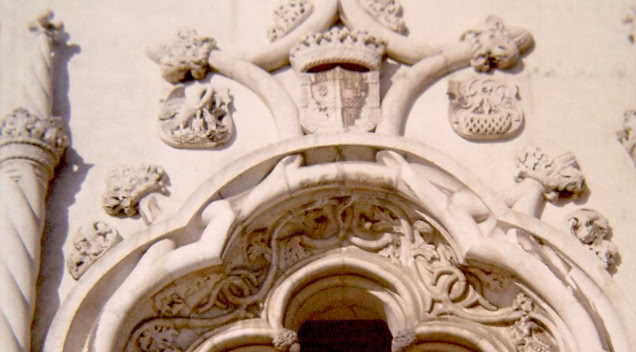
Lisbon. Portugal 1987
Global Studies: Culture/Nature
Photo A.A.Bispo©
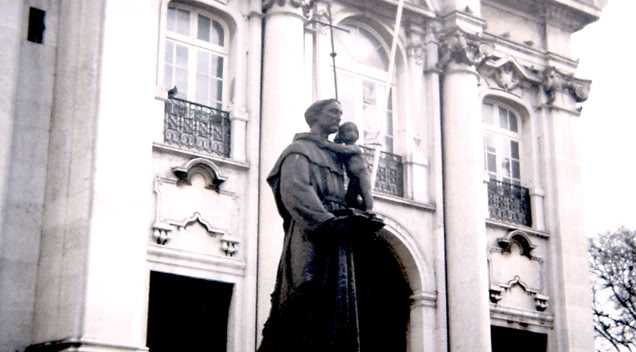
Lisbon. Portugal 1987
Global Studies: Culture/Nature
Photo: A.A.Bispo©
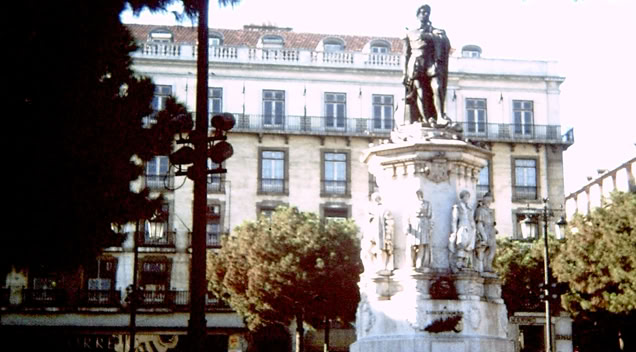
Lisbon. Portugal 1987
Global Studies: Culture/Nature
Photo: A.A.Bispo©
Lisbon. Portugal 1987
Global Studies: Culture/Nature
Photo A.A.Bispo©
Lisbon. Portugal 1987
Global Studies: Culture/Nature
Photo: A.A.Bispo©
Lisbon. Portugal 1987
Global Studies: Culture/Nature
Photo: A.A.Bispo©
Lisbon. Portugal 1987
Global Studies: Culture/Nature
Photo: A.A.Bispo©
Lisbon. Portugal 1987
Global Studies: Culture/Nature
Photo A.A.Bispo©
Lisbon. Portugal 1987
Global Studies: Culture/Nature
Photo: A.A.Bispo©
Lisbon. Portugal 1987
Global Studies: Culture/Nature
Photo: A.A.Bispo©
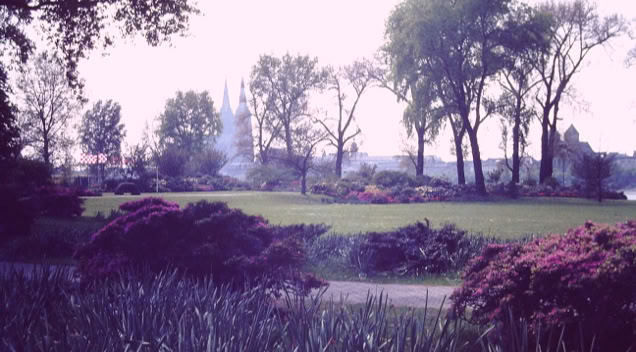
Cologne, Germany 1987
Global Studies: Culture/Nature
Photo A.A.Bispo©
Cologne, Germany 1987
Global Studies: Culture/Nature
Photo: A.A.Bispo©
A.A.Bispo, F. Curt Lange, H. Hülskath
Cologne 1987
Global Studies: Cuilture/Nature
The year 1987 was marked in cultural and musicological studies related to Brazil by the celebrations of the centenary of Heitor Villa-Lobos. As the most renowned figure in the history of 20th-century Brazilian music, this commemorative year was chosen for the holding of the 1st Brazilian Congress of Musicology, from January 27th to February 1st, in São Paulo.
The periodic, if possible quinquennial, holding of musicology congresses had been conceived when the Brazilian Society of Musicology (SBM) was founded in São Paulo in 1981. In 1985, declared the European Year of Music by European bodies, the holding of the congress, coinciding with the founding of the Institute for the Study of Musical Culture of the Portuguese-Speaking World (SMPS), updating, on an international level, the Center for Research in Musicology of the New Diffusion movement, officially established in São Paulo in 1968, it was decided that the Villa-Lobos year offered itself as a suitable occasion for holding the first musicological congress in Brazil. He could count on the preparations for the founding of the institute being made in multilateral forums held in Germany in cooperation with the Brazilian Society of Musicology.
With one of its statutory objectives being to support the Brazilian Society of Music (SBM) and the Brazilian Folklore Association, the ISMPS (International Society of Music and Social Sciences) assumed the thematic programming of the congress and its international organization.
Since 1986 was marked by the commemoration of A. Carlos Gomes, the studies carried out during that year preceded the Villa-Lobos year congress. Their results were presented at the opening of the congress, along with a commemorative publication for the 80th anniversary of Luís Heitor Correa de Azevedo, a prominent figure in the history of musical relations between Europe and Brazil in the decades following the Second World War. The congress was made possible by the São Paulo State Secretariat of Culture, with the support of the Ministry of Culture, FUNARTE, and other official bodies, universities, museums, and ecclesiastical institutions. Among the institutions represented at the congress, the Villa-Lobos Museum of Rio de Janeiro, previously visited, stood out, as well as the School of Music of the Federal University of Rio de Janeiro, with the rector of UNIRIO serving as president and patron of the congress.
The congress aimed to assess the state of research and studies related to music in Brazil. Based on this assessment and the direction of these studies, the congress sought to reflect on theoretical orientations in musicological research, analyses of ideologies and procedures, revisions, and new perspectives.
The congress was preceded by studies and meetings in Lisbon. These studies, updating knowledge and continuing ongoing research since 1974, allowed for the collection of significant data for the analysis of historical-musical literature and musical traditions. These data were considered in the study of conceptions, visions, and ideologies, prepared as a starting point for debates concerning past developments and the current state of research and activities. Portugal's presence at the event was thus made possible by the studies conducted in Lisbon under the presidency of Maria Augusta Alves Barbosa.
In a meeting with the Chilean musicologist Samuel Claro-Valdés, responsible for Latin America and the Caribbean of the Music in the Life of Man project of the International Music Council of UNESCO in Rome 1985, it was decided that a meeting of participants in this project would be held concurrently with the congress, of significance to both parties. This would guarantee the broad representation of the project among Brazilian researchers and would lend the first congress broad, Latin American and even global dimensions. Preparatory studies were initiated for presentation at the congress, including the analysis of concepts, theoretical orientation and ideas of the literature concerning music in Brazil from all periods, and a study on Euro-Brazilian interactions, particularly in the 19th century, discussing conceptualizations, especially those related to the term transplantations.
Reflections and discussions on the use of the concept of transplantation in studies of receptive processes and their effects in Brazil, with particular consideration of the 19th century, were conducted within the framework of the Culture/Nature program of the Brazil-Europe organization. In the debates, the metaphorical use of botanical concepts in colonial studies in Germany in the past was recalled, which should be critically considered in immigration studies. Among the concepts then employed, that of the acclimatization of Europeans in tropical zones stood out. The discussions addressed the issues that arise from the unreflective use of concepts from the natural sciences in cultural studies. In this sense, a study was prepared on the possibilities and difficulties of applying transplantation concepts in their scientific systematics to the analysis of receptive processes and interactions in musical life and creation in Brazil.
In Europe, the Villa-Lobos Year was marked by a concert by Eny da Rocha and a conference held by the Institute for the Study of Portuguese-Language Musical Culture (ISMPS) in Cologne under the auspices of the Brazilian Embassy with the support of the Ministry of Foreign Affairs. At the conference and in the debates that followed, conceptions related to nature in Villa-Lobos's work were considered. The theoretical debate, which had been conducted at the International Music Council's meeting for Latin America and the Caribbean in São Paulo, was continued on an international level.
Also under the auspices of the Brazilian Embassy, the German-Brazilian Society promoted a conference on the work of the ISMPS dedicated to reflections on the concept of Evolution in the study of historical-musical processes in Brazil at the Ibero-Club in Bonn. The debate sparked by criticism of the concept of transplantation in cultural and musicological studies was broadened by considering the concept of Evolution and the history and reception of evolutionary theory and evolutionary ideas in their social implications in Portugal and Brazil during the 19th and 20th centuries. The significance of evolutionary thought was considered in its differences within anthropology and cultural and musical studies in Brazil, particularly in contexts marked by German immigration.
The reflections and studies related to concepts from botany and biology in cultural studies, as well as Darwinism and social Darwinism in analyses and perspectives of historical processes in Euro-Brazilian studies, were addressed in their Latin American and American dimensions in general at colloquia held in Cologne and Bonn following the IMC/UNESCO meeting in São Paulo in February 1987 with the participation of researchers from different fields of knowledge, including Francisco Curt Lange, director of the Inter-American Institute of Musicology in Montevideo. The discussion revisited the interactions of inter-American and transatlantic processes from the 1983 Multilateral Forum, now focusing on the necessary reflection on the application of scientific-natural conceptions in historical-cultural and musicological analysis.
An event of great proportions and significance for immigration studies was the Portuguese folklore festival held with the participation of groups of Portuguese migrants in Central Europe and a competition organized by the Portuguese Center of Cologne under the direction of Armindo Borges, vice-president of the ISMPS, bringing together hundreds of Portuguese and their descendants.
Proceedings of the First Brazilian Congress of Musicology, São Paulo, January 27 to February 1, 1987, year of celebrations of the centenary of the birth of Heitor Villa-Lobos (1887-1959). Publications of the I.S.M.P.S. e.V. and the Brazilian Society of Musicology. Cologne/São Paulo: ISMPS 1991. Inhallt
[First Brazilian Congress of Musicology, São Paulo, January 27 to February 1, 1987] "1. Brasilianischer Kongreß für Musikwissenschaft, São Paulo 27. Januar bis 1. Februar 1987". Die Musikforschung, 40/4 (1987), 354
"First Brazilian Congress of Musicology". Opening speech of the congress delivered in the Dinorah de Carvalho Room of the State Secretariat of Culture on January 27, 1987. Proceedings of the First Brazilian Congress of Musicology, São Paulo, January 27 to February 1, 1987, Year of celebrations of the Centenary of the birth of Heitor Villa-Lobos (1887-1959). Publications of the I.S.M.P.S. e.V. and the Brazilian Society of Musicology. Colonia/São Paulo, 1991
Ethnomusicology and Comparative Musicology in Brazil". Opening speech of the Ethnomusicology and Comparative Musicology session of the 1st Brazilian Congress of Musicology in the auditorium of the Instituto de Artes do Planalto on January 29, 1987. Proceedings of the First Brazilian Congress of Musicology, São Paulo, January 27 to February 1, 1987, year of celebrations of the centenary of the birth of Heitor Villa-Lobos (1887-1959). Publications of I.S.M.P.S. e.V. and the Brazilian Society of Musicology. Cologne/São Paulo, 1991
"In the Villa-Lobos Year: The Need for Scientific Research". Conference for the concert promoted by the Ministry of Foreign Affairs of Brazil in Cologne, on October 22, 1987, under the sponsorship of the Embassy of Brazil in Germany. Published in: Brazil-Europe & Musicology: Lectures, Conferences and Speeches. Cologne, I.S.M.P.S., 1999, 216-219
"Questions about current musicological research and international cooperation". Conference at the Ibero-Club, Bonn, under the sponsorship of the Brazilian Embassy. Brazil-Europe & Musicology: Lectures, Conferences and Speeches. Cologne, I.S.M.P.S., 1999, 402-413
"Associative Work, the Brazilian Society of Musicology and the 1st Brazilian Congress of Musicology". Speech at the opening session of the 1st Brazilian Congress of Musicology, Dinorah de Carvalho Room of the State Secretariat of Culture, September 27, 1987. Proceedings of the First Brazilian Congress of Musicology, São Paulo, January 27 to February 1, 1987, Year of celebrations of the centenary of the birth of Heitor Villa-Lobos (1887-1959). São Paulo, 1991, 25-30
Musicological Research and Associative Work in Brazil". Published in: Brazil-Europe & Musicology: Lectures, Conferences and Speeches. Cologne, I.S.M.P.S. 1999, 212-216
"Final discussion of the First Brazilian Congress of Musicology". Proceedings of the First Brazilian Congress of Musicology, São Paulo, January 27 to February 1, 1987, year of celebrations of the centenary of the birth of Heitor Villa-Lobos (1887-1959). São Paulo, 1991, 319-324
"By way of introduction". Luiz Heitor Correa de Azevedo: 80 years. Testimonials/Studies/Essays in Musicology. Rio de Janeiro: Brazilian Society of Musicology/National Institute of Music - FUNARTE, 1987.
In the year of Villa-Lobos. The need for scientific research (science of science)