BRASIL-EUROPA
GLOBAL STUDIES
CULTURE/NATURE

BRASIL-EUROPA
GLOBAL STUDIES
CULTURE/NATURE
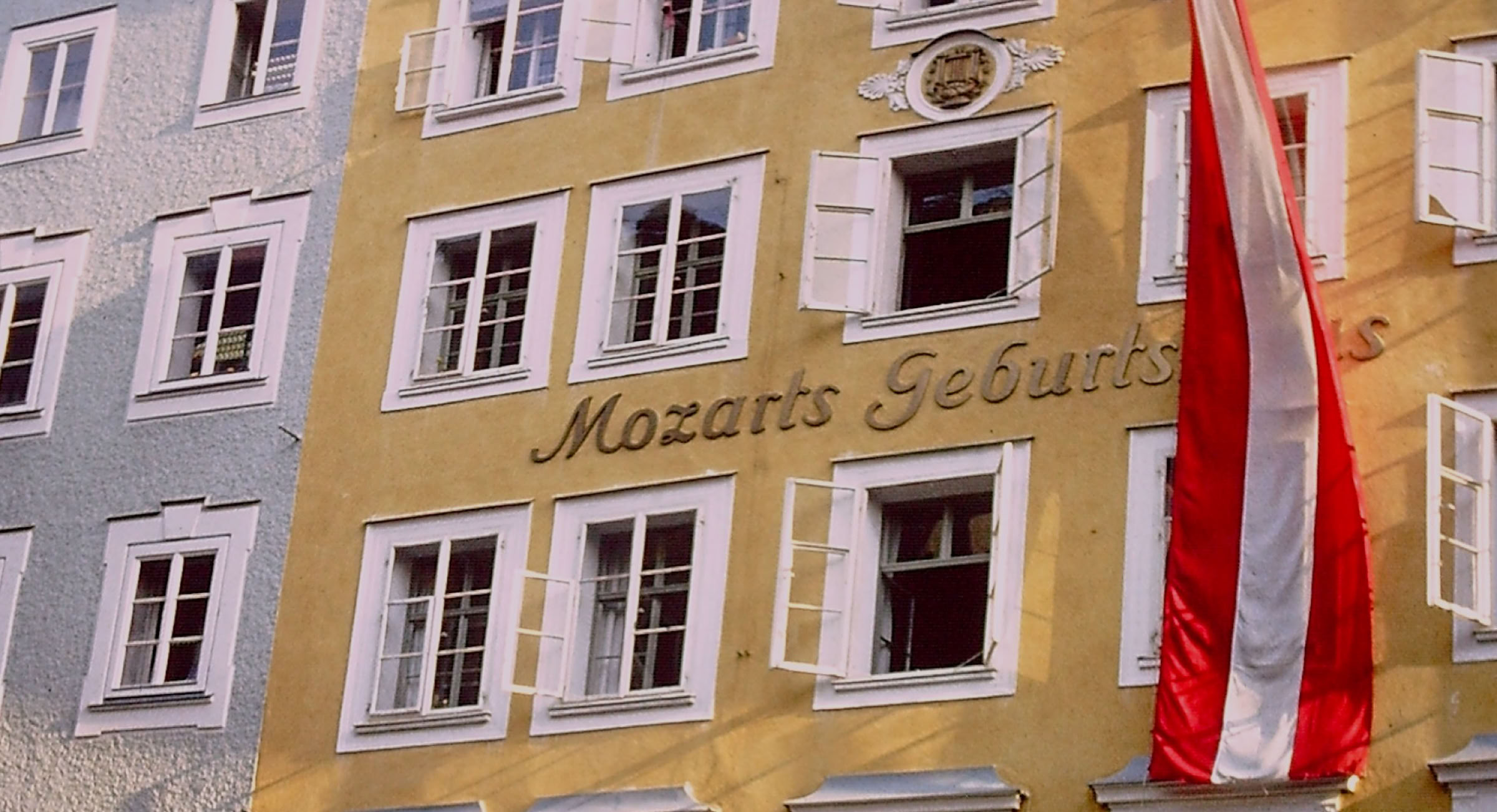
Mozarts House. Salzburg 1991
Global Studies: Culture/Nature
Photo: A.A.Bispo©
1991
Studies of cultural processes in global contexts
using Euro-Brazilian relations as a frame of reference
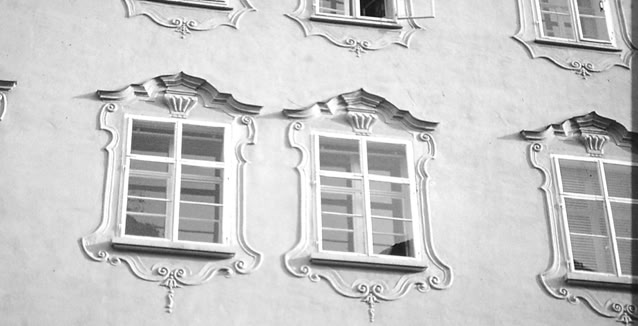
Salzburg. Neukomm's House 1991
Global Studies: Culture/Nature
Photo: A.A.Bispo©
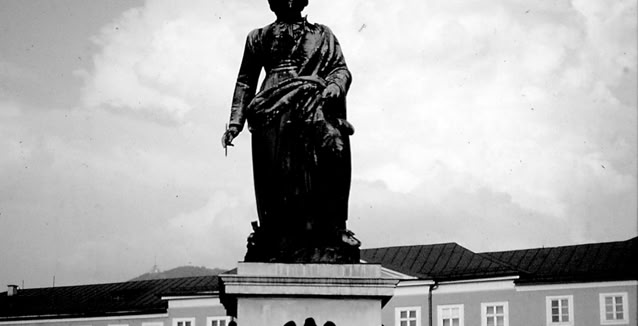
Salzburg. Mozarts Monument. 1991
Global Studies: Culture/Nature
Photo: A.A.Bispo©
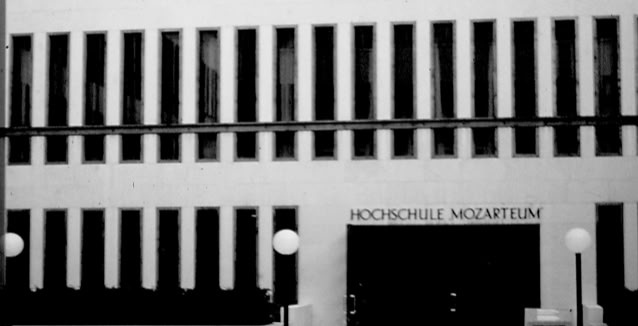
Salzburg, Austria 1991
Global Studies: Culture/Nature
Photo: A.A.Bispo©
Martin Braunwieser 1991
Global Studies: Culture/Nature
Photo: A.A.Bispo©
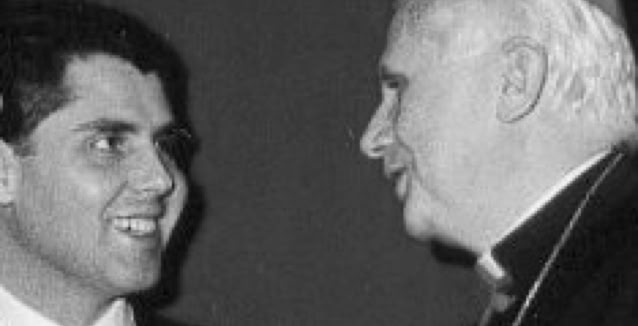
Gregoriana University 1991
Card. Ratzinger and A.Bispo
Global Studies: Culture/Nature
The year 1991 in cultural studies in global contexts related to Brazil was marked by commemorative events for W. A. Mozart that gave rise to studies and publications. The "Mozart Year of 1991" was celebrated in terms of the diffusion and reception of his work in study cycles in Europe and Brazil, prompting reflections on the Classical and Classicism in their broadest senses in the non-European world.
The "Mozart Year of 1991" coincided with the commemoration of the 90th anniversary of Marin Braunwieser's (1901-1991) birth. As a disciple of Bernhard von Paumgartner at the Salzburg Mozarteum, he was one of the great promoters of the cultivation of works by Mozart, Haydn, and other composers of his time in Brazil, including the children of Bach in the Bach Society of São Paulo, which he founded. His commitment was always directed towards cultural ideals, worldviews, and visions of humanity, immaterial values, and a "spirit of Mozart".
The consideration of this orientation towards human values, philosophical reflections, and spiritual dimensions in the appreciation of the works of Mozart and other composers of his time has prompted reconsiderations of Benedict XIV's encyclical Annus qui, whose reception in Jesuit missions in Brazil and Paraguay had been confirmed in research conducted in Mato Grosso ten years earlier on the occasion of the founding of the Brazilian Society of Musicology.
This focus on reciprocal relationships in developments within mission regions and the development of sacred music in global contexts was one of the aspects considered in an academic session at the Gregorian University in Rome for the presentation and discussion of a publication dedicated to the foundations of musical culture in the non-European world of the modern era, with particular attention to the sphere of the former Portuguese patronage law. The session, presided over by Joseph Cardinal Ratzinger, then president of the Congregation for Evangelization, formerly Propaganda Fide, brought together professors from different fields and diplomatic representatives and consisted of a conference and debate on the role played by music in European expansion and Carolingianism in the non-European world.
The book was launched in 1989 at the II International Symposium on Sacred Music and Brazilian Culture, held with the participation of a large number of Brazilian researchers at the Abbey of Maria Laach. Its content was largely based on studies and research dating back to the 1960s in Brazil, which had motivated field research, debates, and courses at the Museum of Popular Arts and Techniques and in the area of Ethnomusicology at the Faculty of Music and Musical/Artistic Education of the Musical Institute of São Paulo.
As the researcher responsible for musical studies in the Mission to Northeast Brazil promoted by Mário de Andrade in the 1930s, Martin Braunwieser acquired great significance in the development of cultural and musicological studies in Brazil. As director of the São Paulo Musical Institute for decades, the introduction of Ethnomusicology into higher education in the 1970s was marked by his life story and training, his visions and conceptions. In a lecture he gave at the international symposium held in Germany in 1989, he recalled his research in the Northeast, particularly in Alagoas. On his last visit to Salzburg, sponsored by the Institute for the Study of Musical Culture of the Portuguese-Speaking World, he provided contributions to the history of the Mozarteum in the years following the First World War, in its significance for studies of cultural processes. His documents and the data offered at the colloquia in Salzburg contributed to the preparation of a monograph to be published on the occasion of his 90th birthday in 1991.
Several of the traditions studied by Martin Braunwieser were considered in research conducted in Eastern Brazil in the 1970s and, later, at the time of the founding of the Brazilian Society of Musicology in 1981.Among the main events of the studies in the Northeast in the 1970s, colloquia held within the scope of the Folklore Festival in the former capital of Alagoas stood out, under the guidance of the anthropologist Theo Btandão. These studies were later resumed in the library of the Historical and Geographical Institute of Alagoas and other institutions in Maceió. In these studies of literature and in meetings, the consideration of cultural processes focused mainly on the São Francisco River as the main route for trade, communication and cultural exchanges of the interior with other cultural centers in Brazil and Europe.
The significance of these studies was recapitulated in a Portuguese-Brazilian colloquium held following the international symposium in Cologne in 1989. There, the need for greater dissemination of the studies then being conducted through the Euro-Brazilian Correspondence became apparent. It was necessary to bring to light the significance of erudite writers and researchers of Alagoas traditions and music, little known in study and research centers in southern Brazil, particularly in São Paulo.
For the Brazilian Society of Musicology, the importance of Isaak Newton's Diccionario Musical (1904) for lexicography, not only in Brazil, was highlighted. The works of authors dedicated to music education, criticism, and essays should also be recognized for their supra-regional significance.
The main focus of attention was always the city of Penedo. Among the aspects considered, the visit of Emperor Pedro II to the São Francisco River stood out, also mentioning, from the perspective of studies related to Europe, the Baron of Penedo and the Universal Exposition of Paris. The orientation towards processes and interactions led to studies of the relationships between scholars from Alagoas and the philosophical thought of Pernambuco and Bahia. Corresponding to the interest shown at the Portuguese Colonial Center in 1989, extracts of studies on the role played in the cultural and musical life of Alagoas by Portuguese circles, particularly the commercial class in the 19th century, were published.
The offering of the monograph to Martin Braunwieser in São Paulo sparked studies on the role played by the São Paulo Musical Institute, where he was a professor and director, in the Constitutionalist Revolution of 1932. Research into hymns composed at that time, important for studies of Paulista and São Paulo city identity, was carried out in libraries in São Paulo and in collections gathered in the capital and in various cities in the interior of the state. This work led to texts that would be published in 1992 in the Correspondência Euro-Brasileira.
Foundations of Christian Musical Culture in the World of the Old Portuguese Patronage Law: fondamenti della Cultura Musicale Cristiana nel Mondo dell'Antico Diritto di Patronato Portoghese. Un'Opera presentata nell'Aula Magna della Pontificia Università Urbaniana il 12 gennaio 1991. Riassunto dell'Autore". Musicae Sacrae Ministerium XXVIII/1&2 (1991), 14-23
Research Report of the Ethnomusicological Department of the Institut for Hymnological and Ethnomusicological Studies (e.V.) from 1985 to 1990". Musicae Sacrae Ministerium XXVIII/1&2 (1991), 124-128, 129-130
In the year of Mozart 1991. On the conceptualization of Classicism in Brazil.. "No 'Ano Mozart' 1991: Da conceituação do Classicismo no Brasil I". Correspondência Euro-Brasileira 13 (1991), 1-8; 14 (1991), 1-16
On the Conceptualization of Classicism in Brazil
Classical style, classical music, classicism
Style of the era and group style
The Classical and spirituality
Wide diffusion of style, pan-European phenomenon and Brazil
Universal musical language, "universals" in music and Brazil
Universalism of immanent ideals and the ethical in Brazilian aesthetics
Martin Braunwieser (Salzburg, June 6, 1901 - São Paulo, December 1, 1991):
Martin Braunwieser and the "Spirit of Mozart" in Brazil
On the rediscovery of the Encyclical Annus qui
From cultural and musicological research in Northeast Brazil:
Relations of Alagoas with the history of philosophical thought in Pernambuco
Relations of Alagoas with the history of anthropological thought in Bahia
Origins and current situation of studies of popular traditions in Alagoas
On the current situation of the cultivation and study of Alagoan traditions
Some studies of Alagoan traditions that have focused on Portuguese origins
Alagoas in the study of music in cultural relations:
Notes on reflection and research of a musicological nature in Alagoas
I. Newton: Milestone of lexicography - Musical Dictionary (1904)
T. de Figueiredo: Musical Education at the beginning of the 20th century
Portuguese commerce, the history of music bands, and amateur pianists
Historical research on Alagoas hymns
Research on ballroom music in Alagoas: Imperial Quadrilles in Santa Luzia do Norte
Musical tradition of the Nossa Senhora Mãe dos Homens festival, Coqueiro Sêco
Commercial class, music for band and piano in São Miguel dos Campos
Africa-Europe-Brazil: Music and scientific paradigms:
Problems: Biological Anthropology and History
The "banda de couro" and its relationship with São Tomé
Supposed remembrance of the struggles of the Quilombo dos Palmares in Quilombo folk play
The need for research into the early centuries of Penedo's musical history
Document on the history of Penedo's music: Manoel Nunez de Barros Leite
Music during Emperor Pedro II's visit to the São Francisco River Region
The Baron of Penedo and music at the Universal Exposition in Paris
Sacred-musical center in the Lower São Francisco River Region in the second half of the 19th century